From Buying and Selling your home

to your every day living - 

We got you covered. 


May 7, 2019

Are Low Interest Rates Here to Stay?


Are Low Interest Rates Here to Stay? | MyKCM

Interest rates for a 30-year fixed rate mortgage have been on the decline since November, now reaching lows last seen in January 2018. According to Freddie Mac’s latest Primary Mortgage Market Survey, rates came in at 4.12% last week!

This is great news for anyone who is planning on buying a home this spring! Freddie Mac had this to say,

“Mortgage interest rates have been steadily declining since the start of 2019. These lower mortgage interest rates combined with a strong labor market should attract prospective homebuyers this spring and could help the housing sector regain its momentum later in the year.”

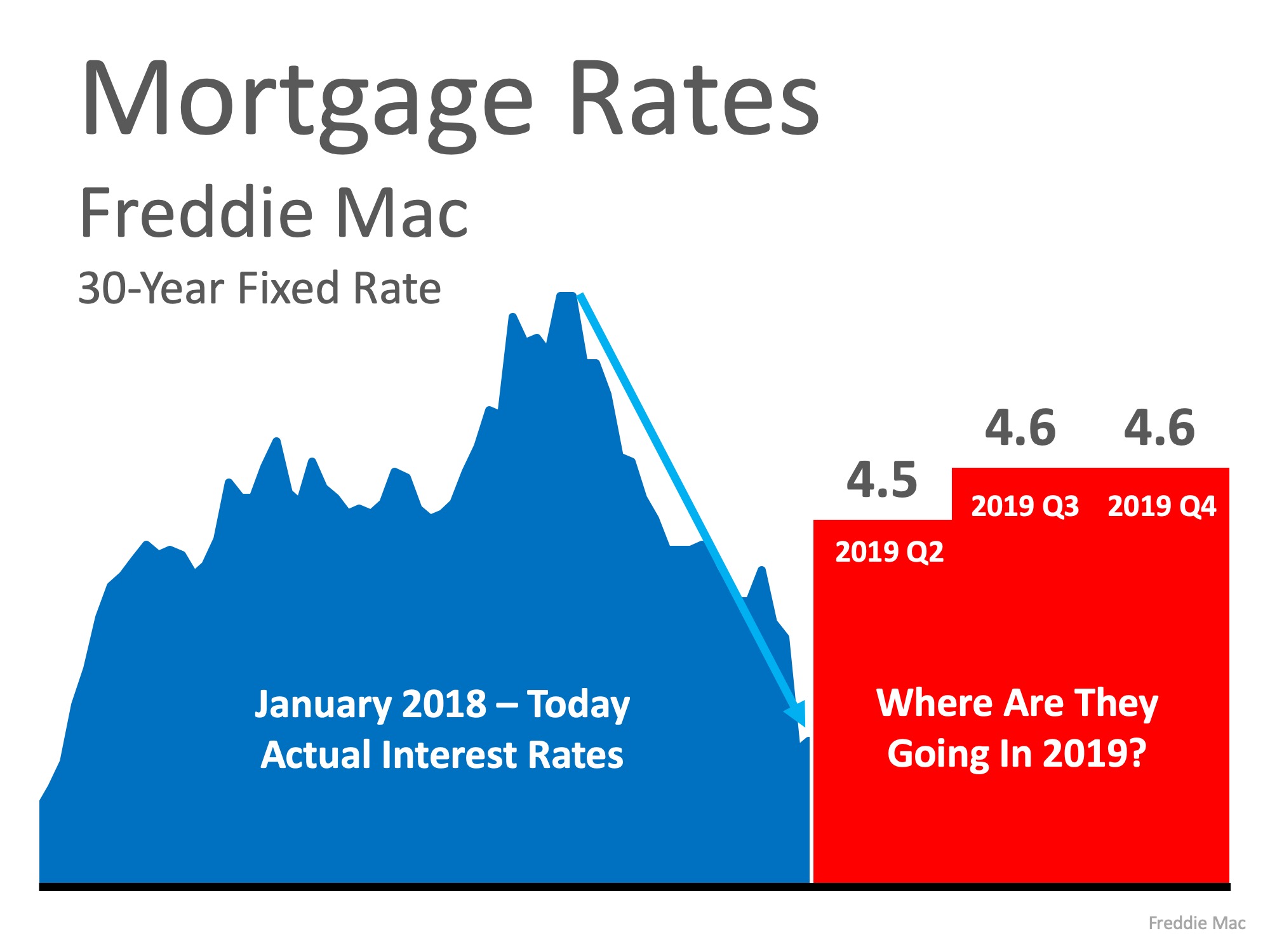
To put the low rates in perspective, the average for 2018 was 4.6%! The chart below shows the recent drop, and also shows where the experts at Freddie Mac believe rates will be by the end of 2019.

Are Low Interest Rates Here to Stay? | MyKCM

Bottom Line

If you plan on buying a home this year, let’s get together to start your home search to ensure you can lock in these historically low rates today!

Posted in
May 2, 2019

Buyer Demand Surging as Spring Market Begins


Buyer Demand Surging as Spring Market Begins | MyKCM

Last fall, some predicted that the 2019 residential real estate market would be a disaster. There was even belief we might experience a housing crash like the one that occurred during the last decade.

However, according to two separate reports*, buyer demand dramatically increased over the last three months, leading into this spring buyers’ market (the March data is not yet available).

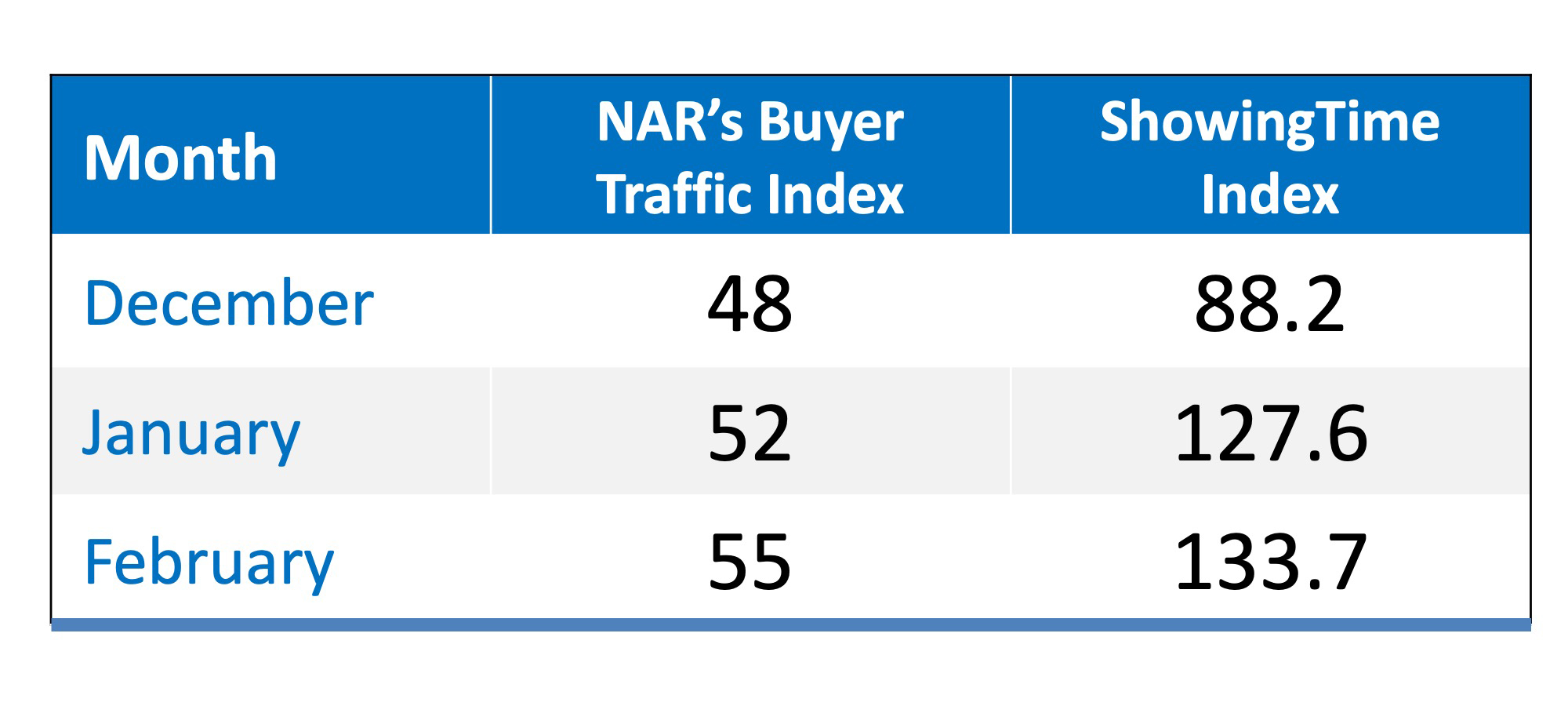
Both the ShowingTime Showing Index and the National Association of REALTORS Buyer Traffic Index show that buyer demand has increased in each of the last three months.

Buyer Demand Surging as Spring Market Begins | MyKCM

Why the increase in demand? Increased buying power.

According to the National Association of Realtors’ Economists’ Outlook Blog, purchasing a home has become more affordable, which has led to increased demand.

“Due to the combination of falling home prices and mortgage rates, the income needed to make an affordable mortgage payment (mortgage no more than 25% of income) on a median-priced home with 10% down payment and 30-year fixed rate mortgage decreased from $60,425 in June 2018 to $53,783 as of February 2019, and the difference of $6,642 represents a gain in buying power because one can afford a home purchase at a lower level of income.”

Bottom Line

It appears the spring buyers’ market is going to be much stronger than many had projected. Whether you are selling or buying, this is important news.


*The methodology behind the indices:

The ShowingTime Showing Index

“The ShowingTime Showing Index® tracks the average number of buyer showings on active residential properties on a monthly basis, a highly reliable leading indicator of current and future demand trends.”

The National Association of REALTORS® Buyer Traffic Index

“In a monthly survey of REALTORS®, NAR asks respondents ‘Compared to the same month last year, how would you rate the past month’s traffic in neighborhood(s) or area(s) where you make most of your sales?’ NAR compiles the responses into an index, where an index above 50 indicates that more respondents reported “stronger” traffic than “weaker” traffic.”

Posted in
April 29, 2019

5 Reasons Why Millennials Buy a Home

5 Reasons Why Millennials Buy a Home [INFOGRAPHIC] | MyKCM

Posted in
April 25, 2019

With Inventory Low: Will Your Dream Home Need Some TLC?


With Inventory Low: Will Your Dream Home Need Some TLC? | MyKCM

According to a new survey from Move.com, the wave of first-time homebuyers hitting the market this summer has resulted in an interesting statistic. Nearly 60% of buyers searching for a home this spring are willing to consider buying a fixer-upper, with 95% believing that the projects needed will increase their new home’s value!

Realtor.com’s Chief Economist, Danielle Hale, pointed to low-inventory at the entry-level price range for the increase in willingness to renovate.

"The combination of rising home prices and limited entry-level homes for sale is prompting many home shoppers to consider homes that need renovating.

Replete with inspiration at their fingertips - like Pinterest, Instagram, and various home renovation TV shows - some home shoppers are comfortable tackling home renovation jobs to find a home that balances their needs with their budget."

Just over half of all respondents who said they would be willing to buy a home in need of some TLC, would also spend more $20,000 to make the home fit their needs.

The most common ‘expected’ renovation is a kitchen remodel which can run anywhere from $22,000 for a minor remodel to $66,000 for a major remodel.

This isn’t a new trend by any means. According to the Joint Center for Housing Studies at Harvard University, home improvement project spending reached a new high in 2018.

“Americans spent $336.9 billion on remodeling projects, up 7.4% from the $313.6 billion a year earlier.”

Home renovation television shows have given many buyers hope that they could renovate a home they can afford into their dream home!

Bottom Line

If you are one of the many Americans considering buying a home this spring, let’s get together to help you find a house with the potential to be your dream home!


Posted in
April 24, 2019

New Study Reveals One Surprising Reason for the Inventory Shortage

New Study Reveals One Surprising Reason for the Inventory Shortage | MyKCM

There has been a great amount written on millennials and their impact on the housing market. However, the headlines often contradict each other. Some claim this generation is becoming the largest share of first-time home buyers, while others claim millennials don’t want to own a home, blaming them for the dip in homeownership rate.

While it is true that millennials have achieved milestones like getting married, having kids, and buying homes later in life than their parents and grandparents did, they are not solely to blame for today’s housing market trends.

Freddie Mac’s Insight Report explored the impact of the Silent and Baby Boomer Generations on the housing market.

If millennials are unable to find a home to buy at a young age like their predecessors, then who is living in those homes?

The answer: Seniors born after 1931 are staying in their homes longer than previous generations, instead choosing to “age in place.”

Freddie Mac found that,

“this trend accounts for about 1.6 million houses held back from the market through 2018, representing about one year’s typical supply of new construction, or more than half of the current shortfall of 2.5 million housing units estimated in December’s Insight.

Older Americans prefer to age in place because they are satisfied with their communities, their homes, and their quality of life.”

According to the National Association of Realtors, inventory of homes for sale is currently at a 3.5-month supply, which means that nationally we are in a seller’s market. A ‘normal’ housing market requires 6-7 months inventory, a level we have not achieved since August 2012.

“The most important fundamental in today’s housing market is the lack of houses for sale. This shortage has been identified as an important barrier to young adults buying their first homes.”

Bottom Line

If you are one of the many seniors who desires to retire in the same area you’ve always lived, you’re not alone. Will your current house fit your needs throughout retirement? If you have any questions about demand for your house, let’s get together to discuss the opportunities available today!

Posted in
Jan. 8, 2019

What Makes a House a Home For You?

Top 4 REAL Reasons We Buy A Home | Simplifying The Market


We frequently talk about why it makes sense to buy a home financially, but more often than not the emotional reasons are the more powerful or compelling ones.

No matter what shape or size your living space is, the concept and feeling of a home can mean different things to different people. Whether it’s a certain scent or a favorite chair, the emotional reasons why we choose to buy our own homes are typically more important to us than the financial ones.

1. Owning your home offers stability to start and raise a family

From the best neighborhoods to the best school districts, even those without children at the time of purchase may have this in the back of their minds as a major reason for choosing the location of the home that they purchase.

2. There’s no place like home

Owning your own home offers you not only safety and security, but also a comfortable place that allows you to relax after a long day!

3. You have more space for you and your family

Whether your family is expanding, an older family member is moving in, or you need to have a large backyard for your pets, you can take all this into consideration when buying your dream home!

4. You have control over renovations, updates, and style

Looking to actually try one of those complicated wall treatments that you saw on Pinterest? Tired of paying an additional pet deposit for your apartment building? Or maybe you want to finally adopt that puppy or kitten you’ve seen online 100 times? Who’s to say that you can’t do all of these things in your own home?

Bottom Line

Whether you are a first-time homebuyer or a move-up buyer who wants to start a new chapter in your life, now is a great time to reflect on the intangible factors that make a house a home.


Posted in
Jan. 7, 2019

Want to Get the Most Money from The Sale of Your Home? Use These 2 Tips!

Want to Get the Most Money from The Sale of Your Home? Use These 2 Tips! | MyKCM

Every homeowner wants to make sure they maximize their financial reward when selling their home. But how do you guarantee that you receive the maximum value for your house?

Here are two keys to ensure that you get the highest price possible.

1. Price it a LITTLE LOW 

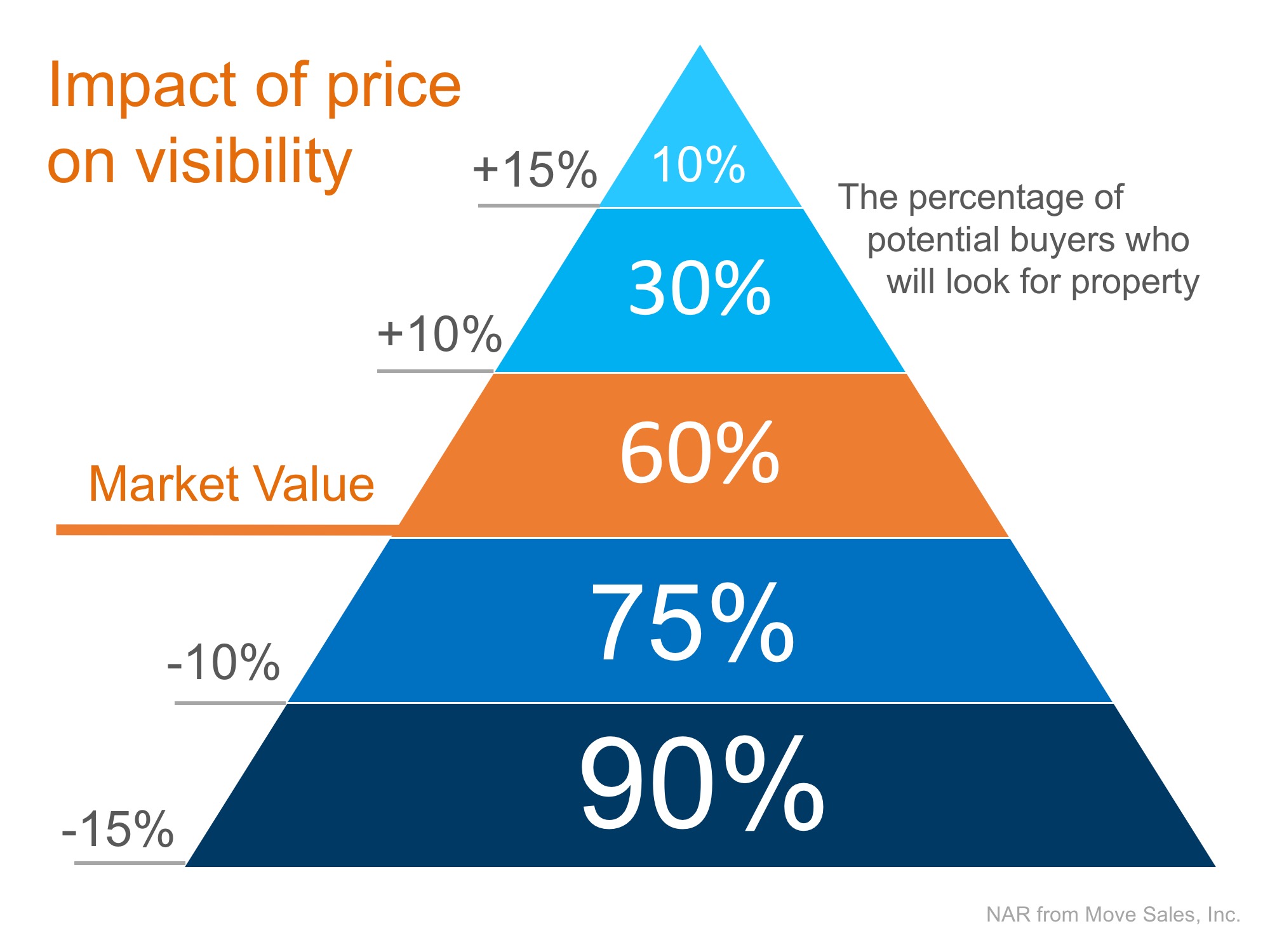
This may seem counterintuitive, but let’s look at this concept for a moment. Many homeowners think that pricing their homes a little OVER market value will leave them with room for negotiation. In actuality, this just dramatically lessens the demand for your house (see chart below).

Want to Get the Most Money from The Sale of Your Home? Use These 2 Tips! | MyKCM

Instead of the seller trying to ‘win’ the negotiation with one buyer, they should price it so that demand for the home is maximized. By doing this, the seller will not be fighting with a buyer over the price but will instead have multiple buyers fighting with each other over the house.

HGTV gives this advice:

First impressions are everything when selling your home. Studies have shown that the first two weeks on the market are the most crucial to your success. During these initial days, your home will be exposed to all active buyers.

If your price is perceived as too high, you will quickly lose this initial audience and find yourself relying only on the trickle of new buyers entering the market each day. Markets are dynamic, and your price has an expiration date. You have one chance to grab attention. Make sure your pricing helps you stand out on the shelf — in a positive way.”

2. Use a Real Estate Professional

This, too, may seem counterintuitive. The seller may believe that he or she will make more money without having to pay a real estate commission, but studies have shown that homes typically sell for more money when handled by a real estate professional.

Research by the National Association of Realtors in their 2018 Profile of Home Buyers and Sellers revealed that,

“the median selling price for all FSBO homes was $200,000 last year. However, homes that were sold with the assistance of an agent had a median selling price of $264,900 – nearly $65,000 more for the typical home sale.”

Bottom Line

Price your house at or slightly below the current market value and hire a professional. This will guarantee that you maximize the money you get for your house.

Posted in
Jan. 6, 2019

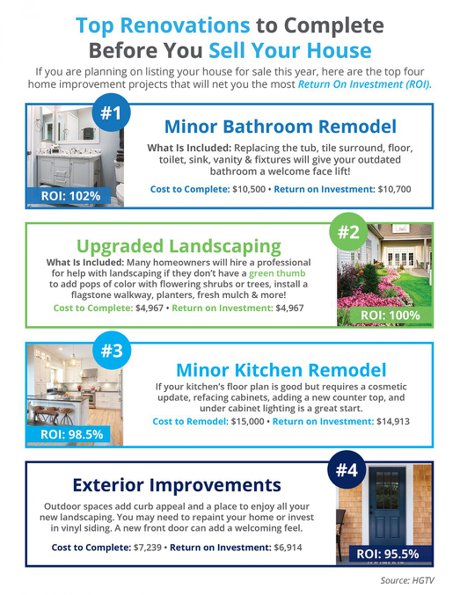
Top Renovations to Complete Before You Sell Your House


Some Highlights:

  • If you are planning on listing your house for sale this year, here are the top four home improvement projects that will net you the most Return on Investment (ROI).
  • Minor bathroom renovations can go a long way toward improving the quality of your everyday life and/or impressing potential buyers.
  • Upgrading your landscaping or curb appeal helps get buyers in the door. These upgrades rank as the 2nd and 4th best renovations for returns on investment.


Posted in
Jan. 2, 2019

Excited About Buying a Home This Year?

Excited About Buying A Home This Year? Here’s What to Watch

Excited About Buying A Home This Year? Here's What to Watch | MyKCM

As we kick off the new year, many families have made resolutions to enter the housing market in 2019. Whether you are thinking of finally ditching your landlord and buying your first home or selling your starter house to move into your forever home, there are two pieces of the real estate puzzle you need to watch carefully: interest rates & inventory.

Interest Rates

Mortgage interest rates had been on the rise for much of 2018, but they made a welcome reversal at the end of the year. According to Freddie Mac’s latest Primary Mortgage Market Survey, rates climbed to 4.94% in November before falling to 4.62% for a 30-year fixed rate mortgage last week. Despite the recent drop, interest rates are projected to reach 5% in 2019.

The interest rate you secure when buying a home not only greatly impacts your monthly housing costs, but also impacts your purchasing power. 

Purchasing power, simply put, is the amount of home you can afford to buy for the budget you have available to spend. As rates increase, the price of the house you can afford to buy will decrease if you plan to stay within a certain monthly housing budget.

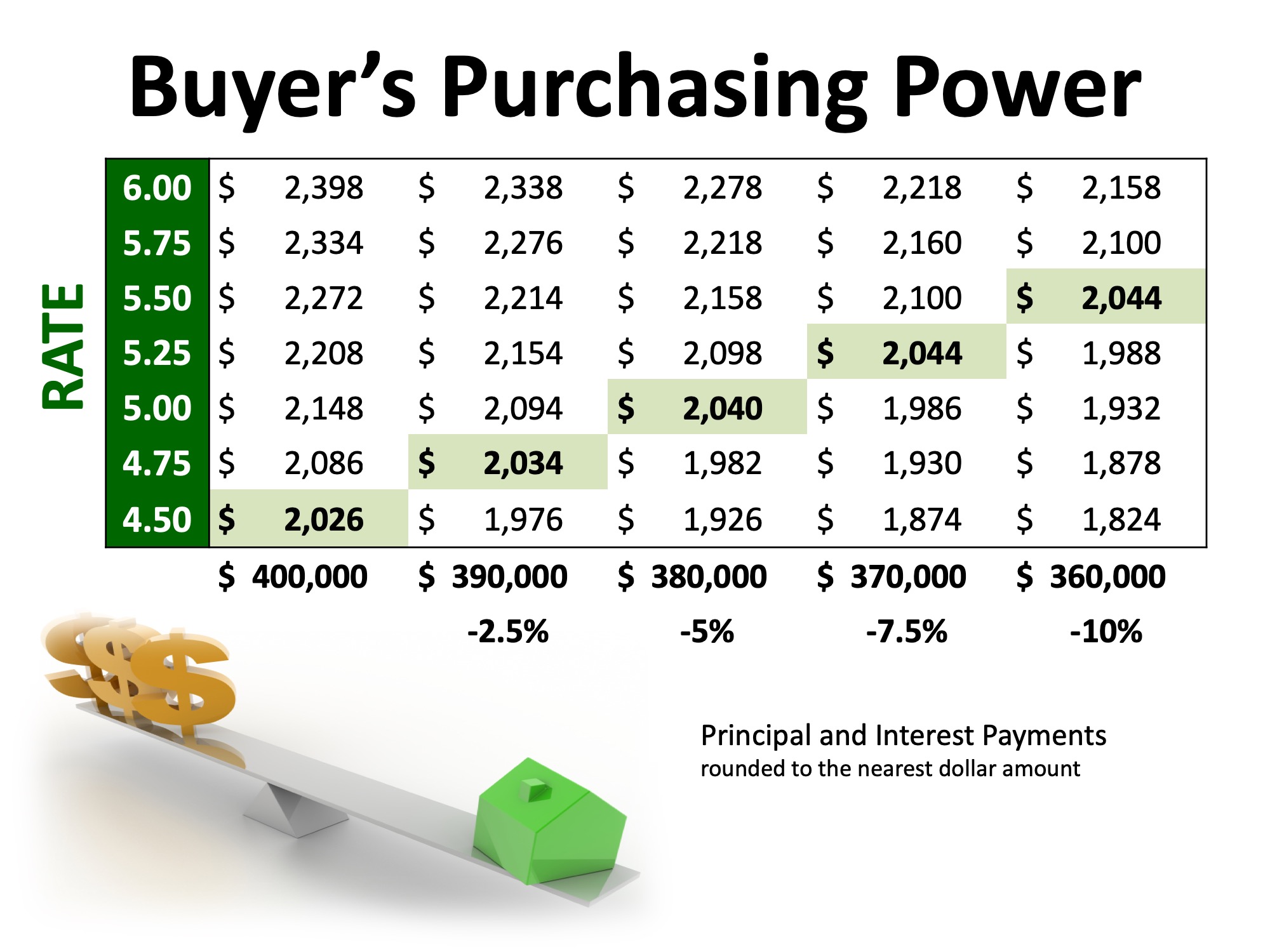
The chart below shows the impact that rising interest rates would have if you planned to purchase a $400,000 home while keeping your principal and interest payments between $2,020-$2,050 a month.
Excited About Buying A Home This Year? Here's What to Watch | MyKCM

With each quarter of a percent increase in interest rate, the value of the home you can afford decreases by 2.5% (in this example, $10,000).

Inventory

A ‘normal’ real estate market requires there to be a 6-month supply of homes for sale in order for prices to increase only with inflation. According to the National Association of Realtors (NAR), listing inventory is currently at a 3.9-month supply (still well below the 6-months needed), which has put upward pressure on home prices. Home prices have increased year-over-year for the last 81 straight months.

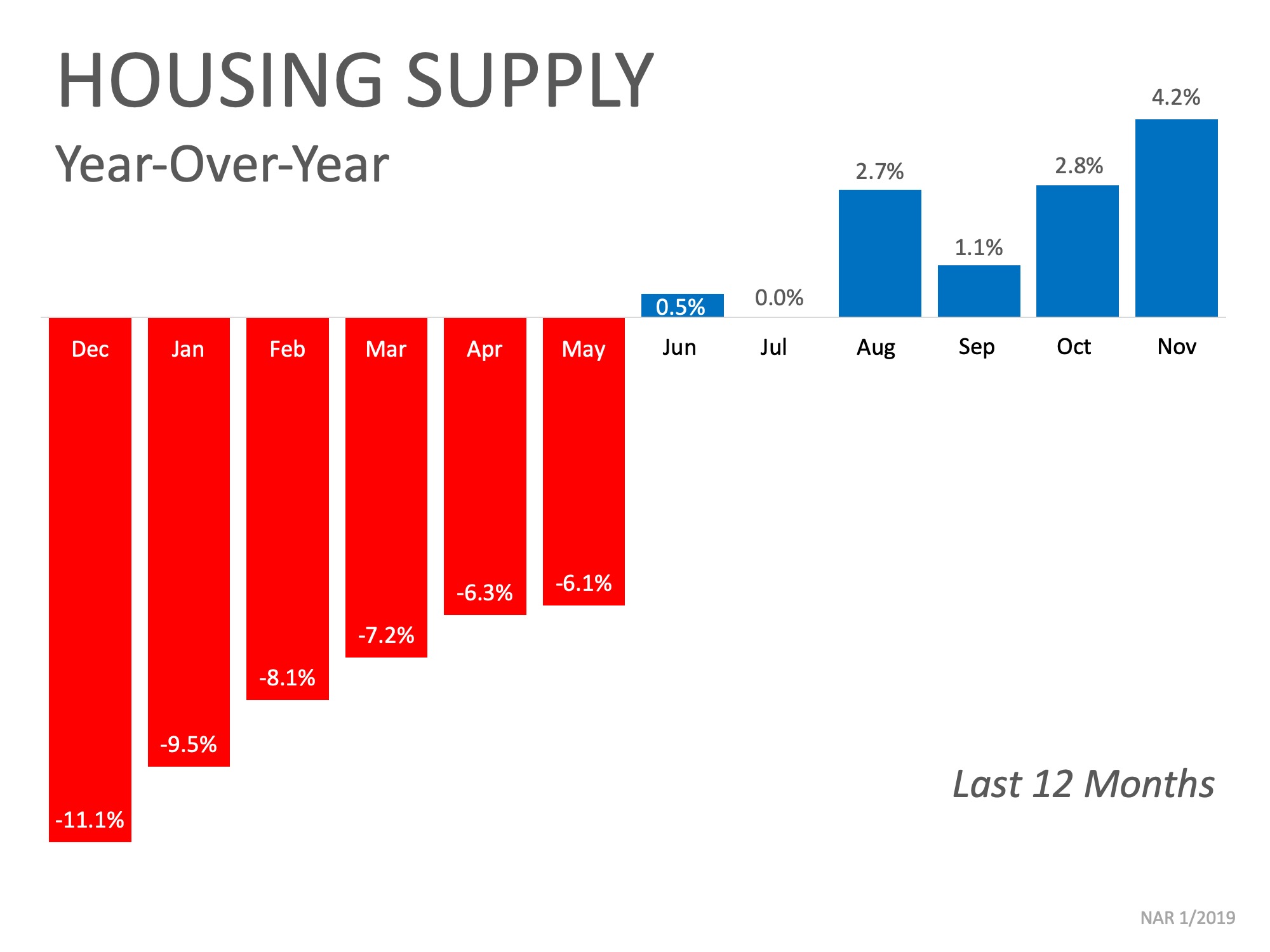
The inventory of homes for sale in the real estate market had been on a steady decline and experienced year-over-year drops for 36 straight months (from July 2015 to May 2018), but we are starting to see a shift in inventory over the last six months.

The chart below shows the change in housing supply over the last 12 months compared to the previous 12 months. As you can see, since June, inventory levels have started to increase as compared to the same time last year.
Excited About Buying A Home This Year? Here's What to Watch | MyKCM

This is a trend to watch as we move further into the new year. If we continue to see an increase in homes for sale, we could start moving further away from a seller’s market and closer to a normal market.

Bottom Line

If you are planning to enter the housing market, either as a buyer or a seller, let’s get together to discuss the changes in mortgage interest rates and inventory and what they could mean for you.

Posted in
Dec. 31, 2018

Thank You!

Posted in